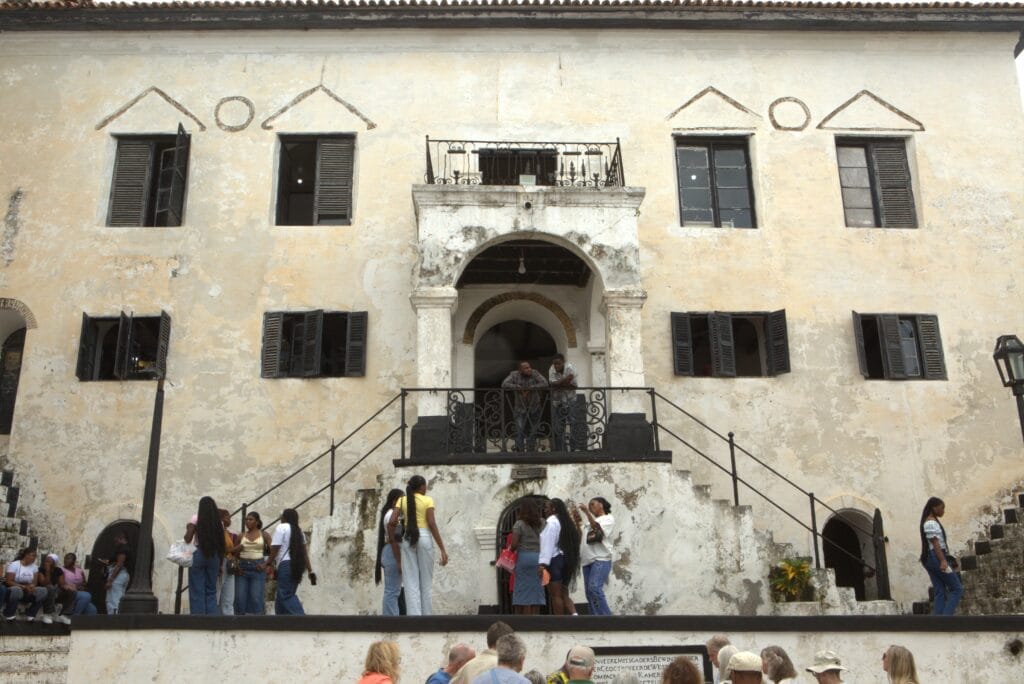
Ghana is the closure of the Atlantic arc. Cape Coast Castle and Elmina Castle — inscribed by UNESCO in 1979 as part of Forts and Castles, Volta, Greater Accra, Central and Western Regions — sit on the same coast where, between the seventeenth and nineteenth centuries, perhaps two million captives walked through the Door of No Return. For the African American diaspora, for Caribbean and Brazilian descendants of the trade, for African scholars and pilgrims, Ghana is the country where the memorial geography reaches its most concentrated point. PANAFEST each year at Cape Coast, presided by the Ministry of Tourism, brings the Door of Return ceremony — the symbolic reversal — to thousands of pilgrims.
For Heritage and Routes, Ghana is the country of three festivals (PANAFEST in late July/August, Fetu Afahye in early September, Hogbetsotso in November), the country where the former Slave Coast 12-day journey reaches its end, and the country whose three pre-colonial states — Asante in Kumasi, Anlo-Ewe in Anloga, Fante in Cape Coast — remain visible institutional presences today. We work with our Ghanaian coordinator across all three regions; our scholar relationships include the University of Cape Coast and the University of Ghana Institute of African Studies.
Three editorial threads run through our Ghana work. First: the memorial route — Cape Coast Castle, Elmina, Assin Manso, the W.E.B. Du Bois Centre in Accra. Second: the indigenous state festivals — Fetu Afahye (Akan-Fante in Cape Coast), Hogbetsotso (Anlo-Ewe in Anloga), the closing durbar at PANAFEST. Third: the Asante seat at Kumasi — the Manhyia Palace, the gold tradition, the kingdom that resisted British conquest into the late nineteenth century.