Accra · Cape Coast · Elmina · Kumasi · Anloga
Ghana — the Door of Return
Where Cape Coast Castle sits, where the diaspora pilgrimage closes, where the Asante kingdom remains.
Ghana is the closure of the Atlantic arc. Cape Coast Castle and Elmina Castle — inscribed by UNESCO in 1979 as part of Forts and Castles, Volta, Greater Accra, Central and Western Regions — sit on the same coast where, between the seventeenth and nineteenth centuries, perhaps two million captives walked through the Door of No Return. For the African American diaspora, for Caribbean and Brazilian descendants of the trade, for African scholars and pilgrims, Ghana is the country where the memorial geography reaches its most concentrated point. PANAFEST each year at Cape Coast, presided by the Ministry of Tourism, brings the Door of Return ceremony — the symbolic reversal — to thousands of pilgrims.
For Heritage and Routes, Ghana is the country of three festivals (PANAFEST in late July/August, Fetu Afahye in early September, Hogbetsotso in November), the country where the Slave Coast 12-day journey reaches its end, and the country whose three pre-colonial states — Asante in Kumasi, Anlo-Ewe in Anloga, Fante in Cape Coast — remain visible institutional presences today. We work with our Ghanaian coordinator across all three regions; our scholar relationships include the University of Cape Coast and the University of Ghana Institute of African Studies.
Three editorial threads run through our Ghana work. First: the memorial route — Cape Coast Castle, Elmina, Assin Manso, the W.E.B. Du Bois Centre in Accra. Second: the indigenous state festivals — Fetu Afahye (Akan-Fante in Cape Coast), Hogbetsotso (Anlo-Ewe in Anloga), the closing durbar at PANAFEST. Third: the Asante seat at Kumasi — the Manhyia Palace, the gold tradition, the kingdom that resisted British conquest into the late nineteenth century.

Festivals
What we offer in the festival calendar
Festival · July-August
PANAFEST
The pan-African memorial festival at Cape Coast — Door of Return, Emancipation Day, ten days.
Festival · September
Fetu Afahye
The Akan-Fante state festival of Cape Coast — 77 deities, seven Asafo companies, presided by the Omanhen.
Festival · November
Hogbetsotso
The Anlo-Ewe migration festival at Anloga — companion festival to Agbogbo-Za in Togo.
Heritage geography
Five regions, five histories
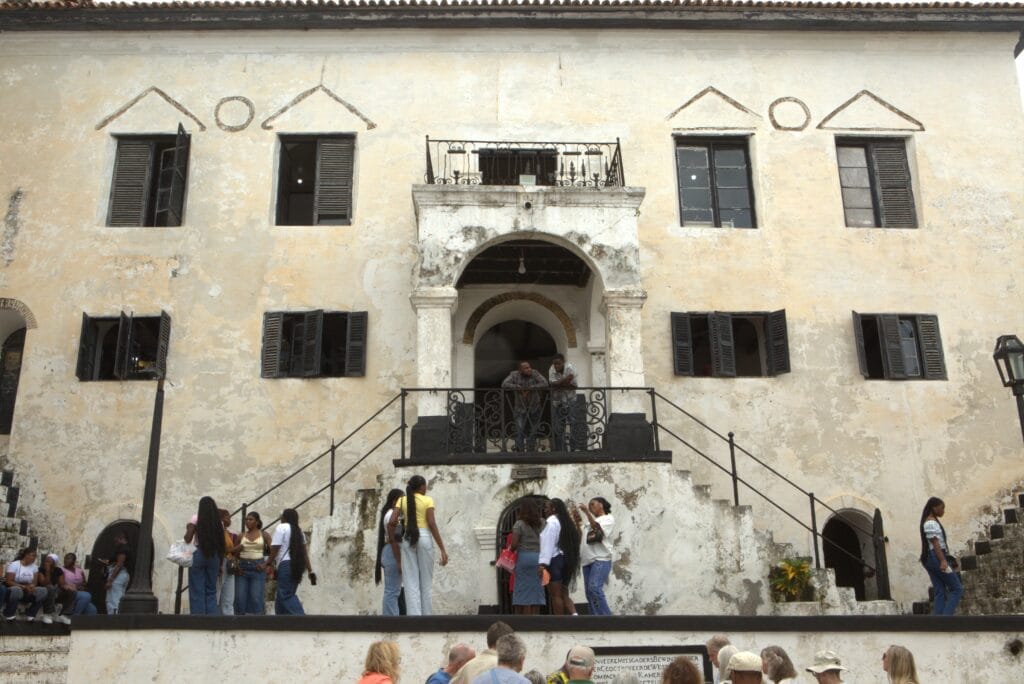
Cape Coast Castle — UNESCO World Heritage Site (1979). British administration of the Gold Coast trade from 1664 to 1877. The dungeons. The Door of No Return. The central pilgrimage site for the African diaspora.
Elmina Castle — twelve kilometres west of Cape Coast. Built by the Portuguese in 1482 as São Jorge da Mina, captured by the Dutch in 1637. The oldest European building still standing in sub-Saharan Africa.
Accra — the modern political centre of pan-Africanism. The W.E.B. Du Bois Centre in Cantonments (where the African American scholar died in 1963). The Kwame Nkrumah Mausoleum. The James Town and Jamestown areas. The arrival and departure city.
Kumasi — the Asante kingdom seat. The Manhyia Palace Museum (current Asantehene Otumfuo Osei Tutu II). The Kumasi Cultural Centre. The gold and kente weaving traditions. The Asante state that resisted British conquest into the late nineteenth century.
Anloga and the Volta Region — the Anlo-Ewe ritual capital. The Awoamefia's seat. The Keta lagoon and Fort Prinsenstein. Site of Hogbetsotso each November. The eastern Ghanaian world that completes the country's ethnic-cultural picture.
« Ghana is where the Atlantic arc closes — Cape Coast, the Door of Return, the durbar of the Asantehene. The country deserves the time the pilgrimage asks for. »
Heritage and Routes — note on Ghana
Tell us what brings you here.
We respond within 48 hours with a written proposal — or with a refusal if the fit isn't right.
Start the conversation