
Lomé · Aného · Togoville · Notsé · Kara
Togo — the middle of the corridor
Where the Slave Coast turns north, where the Ewe migrated from, where the Kabyè wrestle each July.
Togo is the corridor — narrow, francophone, distinct. The country runs from the Atlantic coast at Lomé and Aného up through the Plateaux Region to the Kabyè highlands of Kara and the borderlands beyond. The Slave Coast trade passed through Togo; the Ewe migration left Notsé centuries earlier; the Kabyè state has its own annual rite of passage that the modern Togolese presidency now presides. Four very different worlds, in one country.
For Heritage and Routes, Togo is a country we operate across with a Togolese coordinator who works the Kara region, the Notsé chieftaincy, and the coastal Vodun-practitioner communities of Togoville and Aného. We hold our own circuits at Evala in July and Agbogbo-Za in September; we transit through Togo on the Slave Coast 12-day journey; and we can extend journeys north to Kara or south to the lagoon coast.
Three things distinguish Togo in our portfolio. First: the Ewe origin story — Notsé as the kingdom from which the seventeenth-century migration departed, walking backward through the broken wall. Second: the Kabyè rite of passage — Evala wrestling, the Awala age classes, the presidential durbar. Third: the lagoon coastal heritage — Togoville on the Lake Togo, Aného's mixed Mina and European trading history, the southern Vodun-Yewe communities. The French language is the connecting thread: Togo is where French ethnographic scholarship has done its deepest West African work.
Geography
From the coast to the highlands
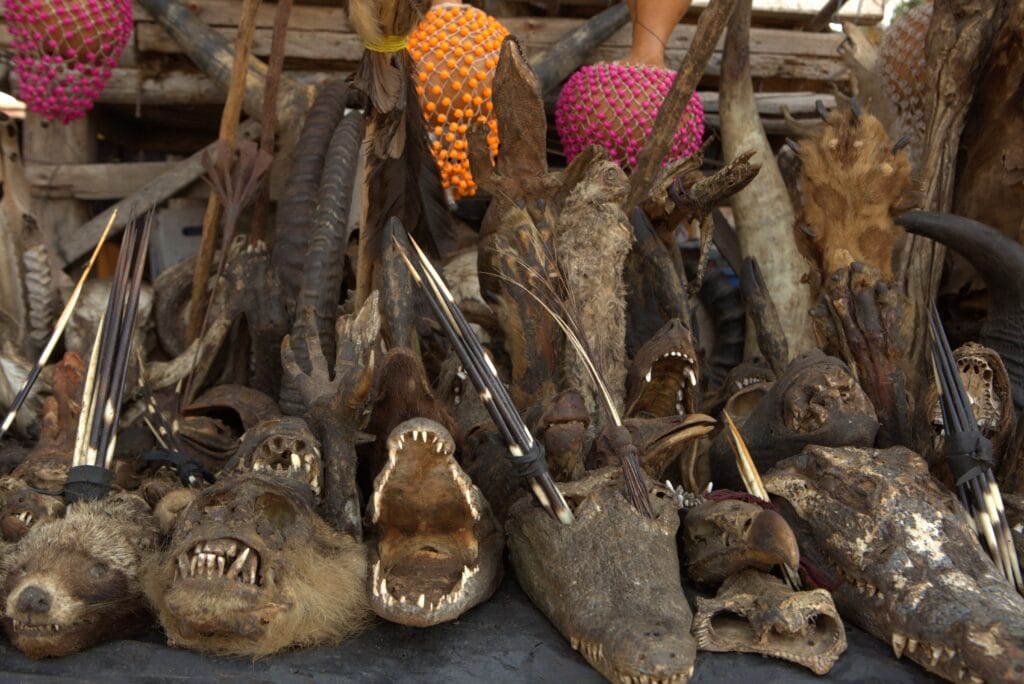
Lomé — the capital, the operational arrival point. The Grand Marché, the cathedral, the seafront, the Fetish Market at Akodessewa (the largest of its kind in West Africa). Lomé is where almost every Togo journey begins and ends.
Aného and Togoville — the lagoon coast. Aného was a major trading post during the colonial period, with mixed German, French and Portuguese heritage; Togoville, on Lake Togo, is a Mina coastal settlement with a strong Vodun presence and the cathedral where Pope John Paul II met with traditional Vodun authorities in 1985. The two sites can be visited as a day trip from Lomé.
Notsé — the Plateaux Region, 100 km north of Lomé. The Ewe origin site. The historical earthen wall remnants of the kingdom from which the seventeenth-century migration departed. Host of Agbogbo-Za each September.
Kara — northern Togo, the Kabyè highlands. The town of Kara and its surrounding Kabyè villages (Lama, Bohou, Pya, Soumdina, Lassa) host the Evala rite of passage each July. The northern landscape — sahelian rather than coastal — is itself a discovery for travellers who have only known southern West Africa.
« Togo is narrow on the map but layered in depth. Four worlds in one country, and the French scholarship to read them. »
Heritage and Routes — note on Togo
Tell us what brings you here.
We respond within 48 hours with a written proposal — or with a refusal if the fit isn't right.
Start the conversation