Grand Durbar Saturday September 5, 2026 · Cape Coast, Central Region · Presided by the Omanhen of Oguaa

Oguaa Fetu Afahye — six days around the Saturday the seventy-seven deities cleansed the city

Walk the routes. Listen to the silences.

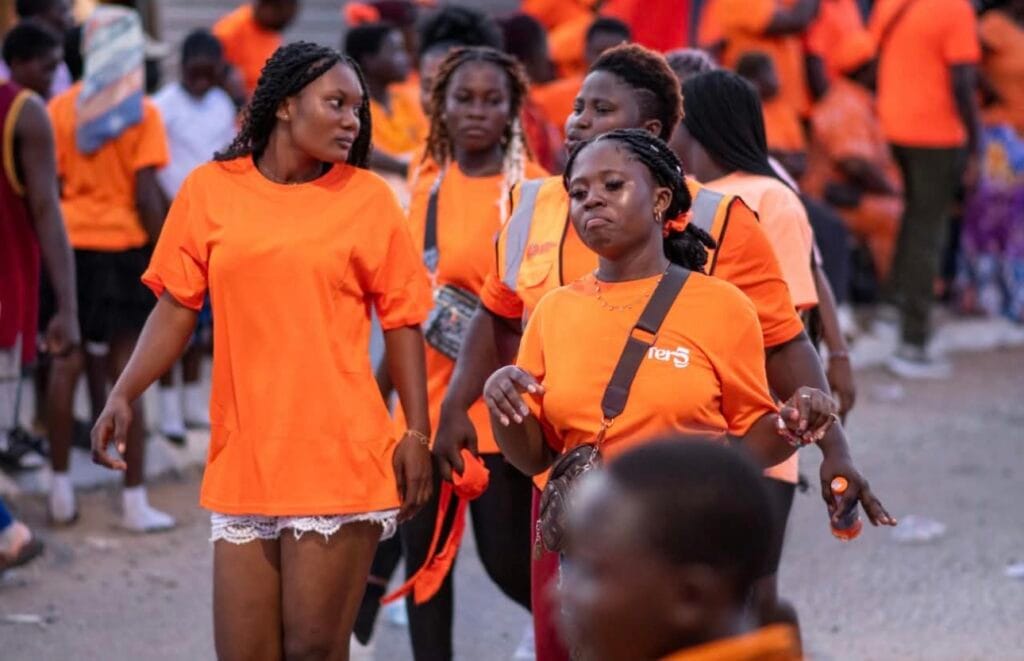
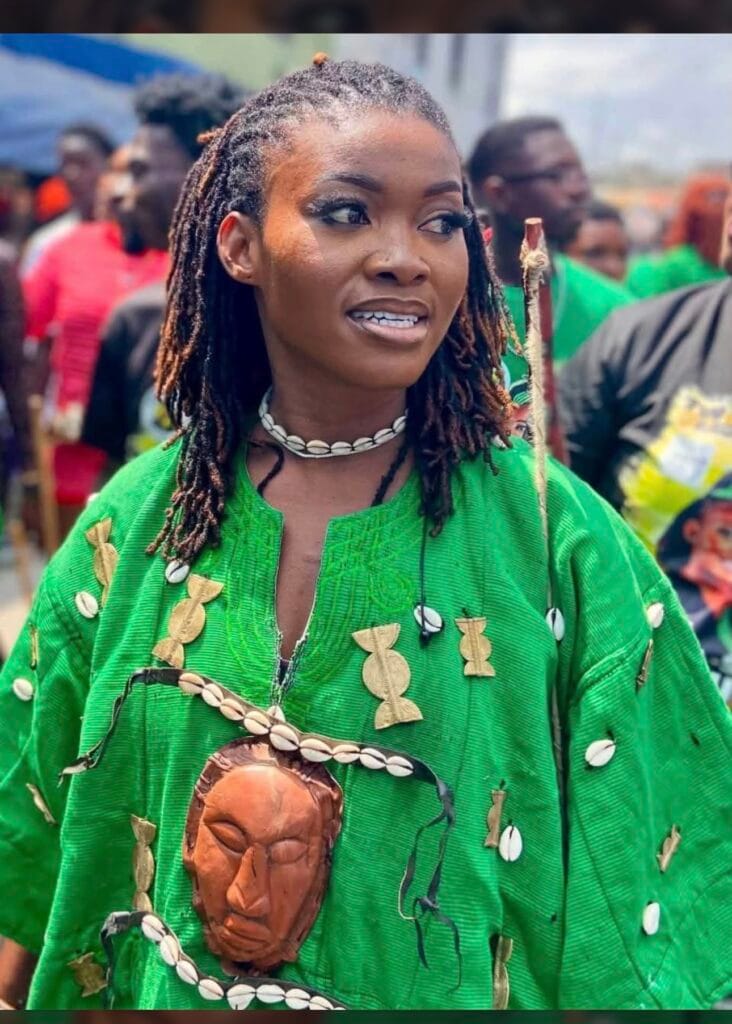
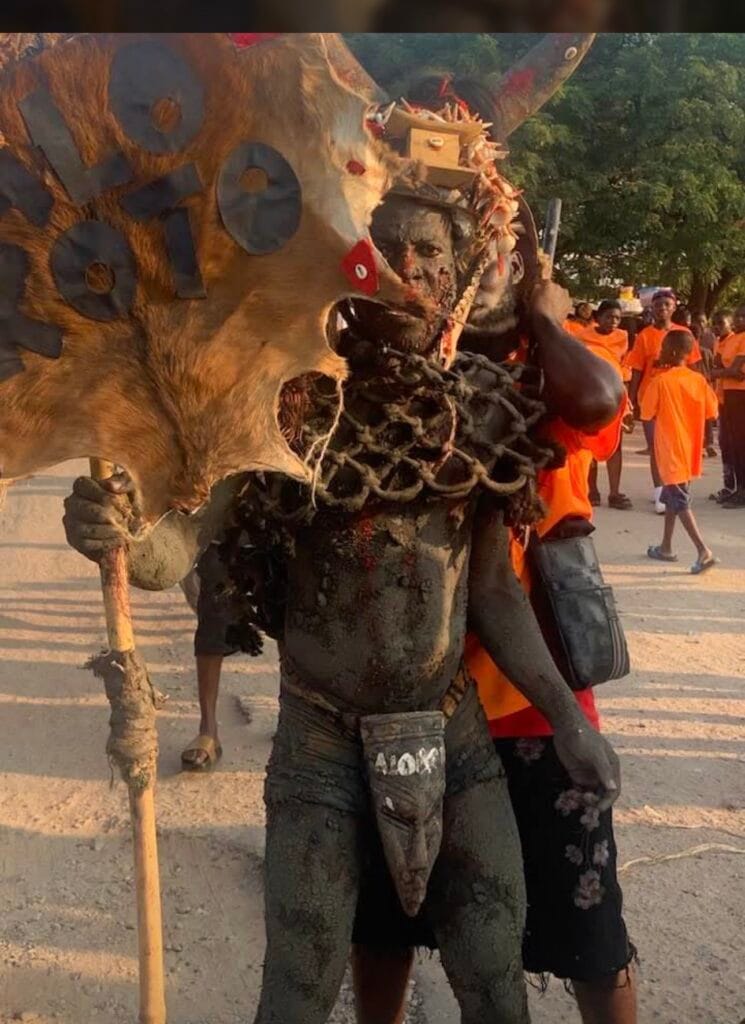
Fetu Afahye is the annual festival of the Cape Coast Traditional Area — the Oguaaman state — held each first Saturday of September. It commemorates the seventy-seven deities of Oguaa who, in the founding legend, stopped a devastating plague and purified the community. Today it is also the civic centre of the Fante year, anchored by the durbar of the Omanhen of Oguaa and by the parade of the seven Asafo companies.

What you are reading

An editorial reference for the Oguaa state festival

Oguaa Fetu Afahye — sometimes shortened to Fetu Afahye — is the annual festival of the Oguaaman, the traditional state of Cape Coast. Oguaa is the Fante name for the city; the modern English name Cape Coast comes from the Portuguese Cabo Corso, given when the Portuguese established their first trade post here in 1471. The festival is held each year on the first Saturday of September, with a week-long ritual structure leading up to the durbar. The 2026 edition culminates on Saturday, September 5.

The Asafo flags carried by the seven warrior corporations of Cape Coast — appliqué textiles depicting proverbial scenes, developed across the eighteenth and nineteenth centuries — now sit in the collections of the British Museum, the Metropolitan Museum of Art, the Smithsonian National Museum of African Art, the Musée du quai Branly–Jacques Chirac, and the Volkenkunde Museum. For museum curators, art historians, and serious students of West African textile traditions, the festival is unparalleled.

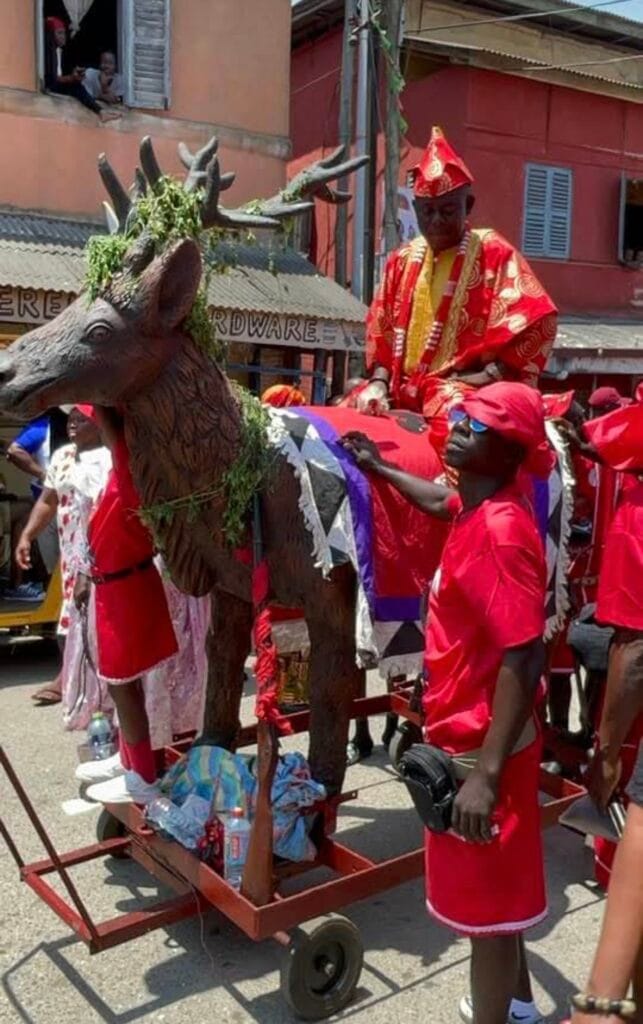
"A city that called on its seventy-seven gods, was cleansed, and walks back each September to remember. Asafo flags above; Omanhen on palanquin below; a state still answering to itself."

Heritage and Routes — editorial framework

The festival

One Saturday in September, anchored by the Omanhen and the seventy-seven deities

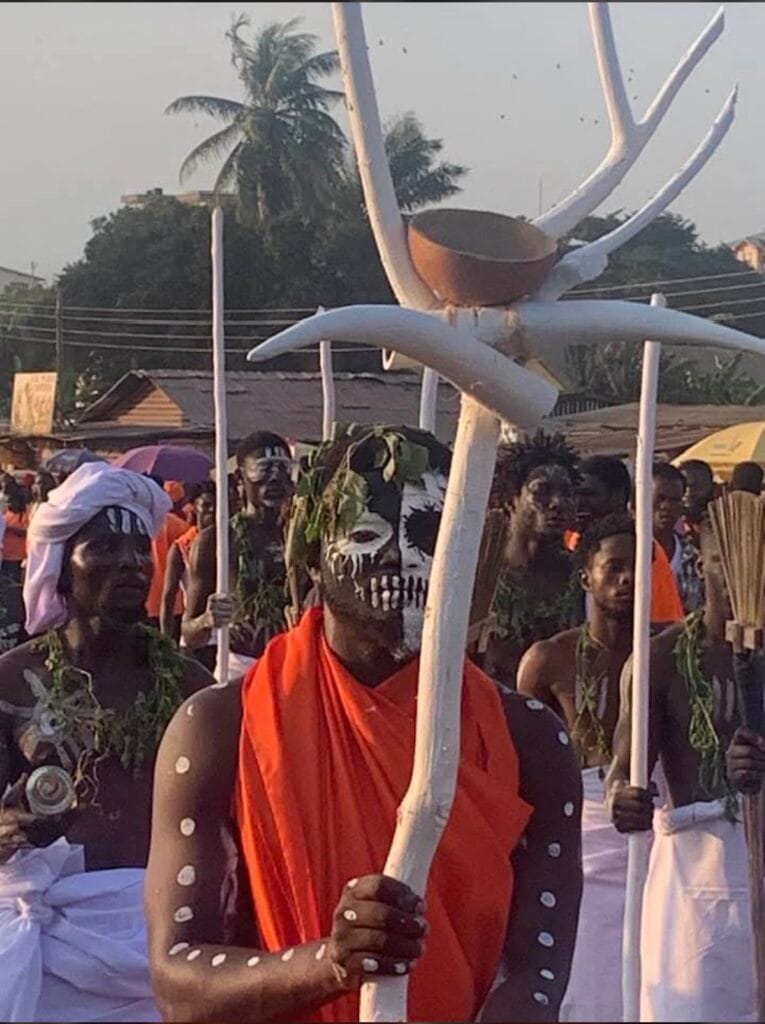
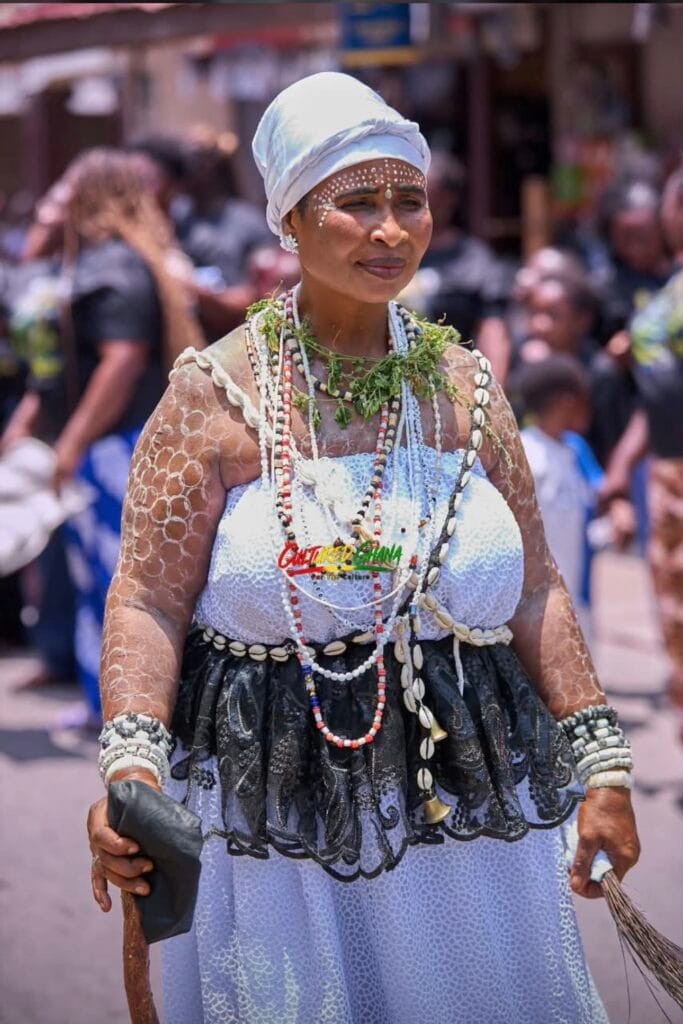
The festival has two combined registers — religious and civic — that the Oguaaman does not separate. The religious register: the founding legend tells of a devastating plague that struck Oguaa in an earlier century. The community appealed to its seventy-seven deities — a pantheon including river deities (Nana Pra, the deity of the Pra river), forest deities, ancestral spirits, and tutelary protectors. The deities interceded, the plague ended, the city was cleansed. The festival is the annual renewal of that intercession.

The civic register: the festival is the central state event of the Oguaaman traditional area. The Omanhen of Oguaa — the paramount chief, currently Osabarima Kwesi Atta II (enthroned 1992) — presides over the Saturday durbar from a state palanquin. The Oguaa Traditional Council gathers in full session. The seven Asafo companies of Cape Coast — the traditional warrior corporations — parade in full regalia with their distinctive flags. Government representatives from the Ghana state attend in their official capacities.

The week runs Sunday–Sunday. The most distinctive moment is Tuesday — the Apaa, or drumming ban: a community-wide ban on drumming across Oguaa, a period of ritual silence that prepares the community spiritually. Visitors arriving on Tuesday should expect a noticeably quieter city. Thursday lifts the ban; Friday brings preparatory rituals at the Omanhen's palace where the seven Asafo gather and their flags are inspected; Saturday is the Grand Durbar with the procession of the Omanhen, the parade of the Asafo, the cleansing of the Fosu lagoon, the speeches and banquet. Each edition draws tens of thousands of attendees to Cape Coast.

The two registers

Religious cosmology and civic militia — the two souls of the Oguaaman

Register 1 — Akan-Fante cosmology

The seventy-seven deities of Oguaa

The Oguaaman pantheon comprises seventy-seven named deities — a number that is both literal (the major deities are individually named in Oguaa traditional theology) and symbolic (seventy-seven also represents totality in the Akan numerological tradition). The deities fall into several categories: river and water deities (the most prominent being Nana Pra, deity of the Pra river which flows past Cape Coast to the Atlantic, honoured at the start of the durbar with libations); forest and earth deities (protectors of specific groves and sacred trees); ancestral spirits (the lineage ancestors of the Oguaa royal house); and tutelary deities of specific sites and functions.

Fetu Afahye does not require visitors to participate in the religious dimension. The public processions and the durbar are open. Specific rituals at shrines, conducted by priests of each deity, are not opened to outsiders — they are the work of the priesthood for the community.

Register 2 — civic militia

The seven Asafo companies of Cape Coast

The Asafo are the traditional warrior corporations of the Fante people — civic-military institutions that originated in the seventeenth century as Cape Coast's response to the increasing European presence on the coast. Each town had its Asafo; Cape Coast historically had seven, numbered and named:

  • No. 1 — Bentsir Asafo (the senior company)
  • No. 2 — Anaafo Asafo
  • No. 3 — Ntsin Asafo
  • No. 4 — Nkum Asafo
  • No. 5 — Brofomba Asafo
  • No. 6 — Akrampa Asafo
  • No. 7 — Amanful Asafo

Each company has its own shrine — the posuban, often a small concrete building decorated with painted figures and proverbs — its own colour palette, its own historical lineage, and its own set of flags.

Asafo flags — world textile heritage

The Asafo flags (frankaa) and the international collections

The Asafo flags — called frankaa in Fante — are the most internationally recognised element of Oguaa material culture. They are appliqué textiles, typically two to three metres wide, depicting proverbial scenes (animals, human figures, hunting scenes, military symbols) — each scene a coded message of the company's identity, claims, and rivalries with other companies. The flags developed across the eighteenth and nineteenth centuries, integrating European cloth (often Manchester cotton imported through Cape Coast Castle) with West African design traditions.

Major collections of Asafo flags are held by:

  • The British Museum (London) — the largest single collection
  • The Metropolitan Museum of Art (New York)
  • The Smithsonian National Museum of African Art (Washington DC)
  • The Musée du quai Branly–Jacques Chirac (Paris)
  • The Volkenkunde Museum (Leiden, the Netherlands)

Fetu Afahye is the one day each year when the seven Asafo companies of Cape Coast parade in full regalia, with their historical flags carried and contemporary flags newly commissioned. For museum curators, art historians, and serious students of West African textile traditions, the festival is unparalleled.

The circuit

Two days of arrival, three festival days, one day of digestion

"The Saturday durbar is the festival's public face. The Friday gathering of the Asafo at the Omanhen's palace is its constitutional moment — the seven companies formally re-affirming their place in the Oguaaman state."

Day by day

The 6-day itinerary

Day 01 · September 1

Accra — arrival

Welcome at Kotoka International Airport. Transfer to Accra hotel. Evening dinner with Fèmi and the Ghana coordinator. Introduction to the week ahead — what Oguaa Fetu Afahye is, the legend of the seventy-seven deities, the Asafo company tradition, the Omanhen's role.

Day 02 · September 2 (Wednesday)

Accra → Cape Coast

Morning departure from Accra. Drive 165 km west along the coast to Cape Coast. Midday arrival, lunch with a view of the castle. Afternoon settling-in walk through Cape Coast town with our coordinator pointing out the posuban (Asafo shrines) of each of the seven companies — small concrete buildings, often brightly painted with proverbs and figures. Evening briefing with a historian from the University of Cape Coast on the Oguaaman state and the Asafo tradition.

Day 03 · September 3

Cape Coast — Castle visit + Fante context

Morning guided visit to Cape Coast Castle (a sober and powerful contrast — the European trade fort within the same town as the Oguaaman, two institutions that coexisted across centuries). Afternoon visit to the Cape Coast Centre for National Culture, with introduction to Akan-Fante religious traditions distinct from Vodun. Evening free.

Day 04 · September 4 (Friday)

Cape Coast — Friday Asafo gathering

Morning visits to two of the seven Asafo posuban with permission from the companies (typically Bentsir and one other). The visits allow observation of the painted figures and the explanation by Asafo elders of the proverbs depicted. Afternoon: the Friday gathering at the Omanhen's palace. The seven Asafo companies arrive in formation, present themselves to the Omanhen, have their flags inspected, receive his formal blessing for the durbar the next day. This is one of the most striking and least-visited moments of Fetu Afahye.

Day 05 · September 5 (Saturday)

Cape Coast — the Grand Durbar

The first Saturday of September. Morning procession of the Omanhen on the state palanquin, carried through the central streets of Cape Coast, with the Asafo companies parading in full regalia — flags, drumming, traditional dance. The procession concludes at the durbar grounds. Late morning durbar proper — the Omanhen receives delegations, gives the annual speech, performs the libations to Nana Pra and the other senior deities, observes the cleansing of the Fosu lagoon. Afternoon traditional banquet, continued music, the Asafo flags on display. Long day — typically 8am to 8pm.

Day 06 · September 6

Cape Coast → Accra — digestion

Slow Sunday morning at Cape Coast. Final conversations with Asafo elders we met during the week — typically a more reflective register the morning after the durbar. Late morning departure for Accra. Lunch en route. Arrival in Accra mid-afternoon. Evening group debrief at our Accra hotel. Departures the following day, or continuation programs.

Three layers of accompaniment

Who walks with you through Fetu Afahye

01

The Ghana coordinator

Our long-standing Ghanaian historian co-operator, who has worked Cape Coast since 2019 across both PANAFEST and Fetu Afahye. Gives us the festival-specific access protocols, our seats at the durbar grounds, the introductions to the Oguaa Traditional Council, and the year-specific Asafo visit coordination.

02

The Oguaa Traditional Council liaison

A council-appointed liaison for visitor delegations. The Oguaa Traditional Council takes the integrity of Fetu Afahye seriously and prefers formal coordination. The liaison briefs us on protocol, on the senior Asafo elders to receive, on the etiquette of approaching the Omanhen's palace.

03

The scholars

Historians from the University of Cape Coast (West African centre for Akan studies and slavery memory studies), specialists in Asafo flag tradition (Doran H. Ross, Peter Adler, Nicholas Barnard on flag iconography), and Fante religious tradition specialists. Day 2 evening briefing introduces all three threads.

Ceremony participation

What is open to us, and what is not

We can attend

  • The Saturday Grand Durbar (full access, reserved seats)
  • The Friday Asafo gathering at the Omanhen's palace, from the visitor section
  • The Omanhen's procession through Cape Coast on Saturday morning
  • Two of the seven Asafo posuban, with elder permission
  • The cleansing of the Fosu lagoon, from public viewing

We do not attend

  • Specific shrine rituals conducted by priests of the seventy-seven deities
  • The Omanhen's private council with the Oguaa Traditional Council
  • Inner Asafo company councils where company-specific matters are decided
  • The interior of the Omanhen's palace beyond the public courtyards

Practical

Logistics for early September in Cape Coast

Group size

Four to twelve travellers. Cape Coast accommodates larger groups during festival week.

Physical level

Moderate. Long Saturday durbar with much walking and standing.

Weather

Early September: end of rainy season — daytime 26-30°C, nighttime 22-24°C, occasional rain. Cape Coast trade winds keep the air moving.

Visa and vaccines

Ghana e-visa (we provide guidance). Yellow fever mandatory.

Dress code

The Saturday durbar requires respectful dress — Ghanaian kente, Fante cloth, or formal Western dress. No shorts, sleeveless, beach attire.

Date confirmation

Always first Saturday of September. Detailed week schedule (Asafo posuban visits, specific Friday timing) confirmed by Oguaa Traditional Council about 3 weeks before.

Investment

A bespoke proposal, never a list price

We do not publish a per-person rate for our Fetu Afahye circuit. Pricing varies based on group size, accommodation tier, and degree of customisation (some travellers add private museum-collection consultations on Asafo flags in Accra).

Our 6-day circuit sits in the same range as Smithsonian Journeys' museum-tradition programs and Road Scholar's editions on Ghana. Confirmation recommended by mid-July for the September festival.

Questions before you travel

FAQ — Oguaa Fetu Afahye 2026

When exactly is Fetu Afahye 2026?

The Grand Durbar is always the first Saturday of September. For 2026: Saturday, September 5, 2026. The week-long ritual structure runs from the preceding Sunday-Monday (preparations) through Tuesday (Apaa drumming ban), Wednesday-Thursday (cleansing rituals), Friday (Asafo gathering at the Omanhen's palace), Saturday (Grand Durbar), Sunday (post-durbar).

How does Fetu Afahye differ from PANAFEST?

PANAFEST is a pan-African memorial festival held at Cape Coast in late July-early August, coordinated by the Ghana Ministry of Tourism and centered on the slave trade memorial sites (Cape Coast Castle, Elmina Castle). Fetu Afahye is the indigenous Oguaaman state festival held in early September, coordinated by the Oguaa Traditional Council and centered on the seventy-seven deities and the Asafo companies. Both happen at Cape Coast; their religious-civic horizons are very different. Some travellers attend both in the same year.

What are the Asafo flags I keep reading about?

The Asafo flags (frankaa in Fante) are appliqué textiles, two to three metres wide, depicting proverbial scenes that encode each company's identity, claims, and rivalries. They developed across the eighteenth and nineteenth centuries, integrating European cloth imported through Cape Coast Castle with West African design traditions. Major collections at the British Museum, the Metropolitan Museum of Art, the Smithsonian, the Musée du quai Branly, and the Volkenkunde Museum at Leiden. Fetu Afahye is the one day each year the flags are carried in their original ceremonial context.

What is the Apaa drumming ban?

The Apaa is the community-wide ban on drumming across Oguaa observed on the Tuesday of festival week. It is a period of ritual silence that prepares the community spiritually for the durbar. Visitors arriving on Tuesday should expect a noticeably quieter city — the rhythmic life of Cape Coast (which is significant) is suspended. The ban is lifted on Thursday morning and drumming resumes.

Are the seventy-seven deities a literal count?

Both literal and symbolic. The major deities of Oguaa are individually named in the traditional theology — including Nana Pra (the river deity of the Pra), the deities associated with the Fosu lagoon, the ancestral spirits of the royal house, and the tutelary protectors of specific sites. Seventy-seven is also a number that represents totality in the Akan numerological tradition. The full pantheon list is held by the priesthood of the Oguaaman.

Can we visit the Asafo posuban?

Two of the seven posuban are visited each year as part of our circuit, with elder permission. The specific companies vary year by year — typically Bentsir (the senior company) and one other. The visits allow observation of the painted figures on the shrine's exterior and the explanation by an Asafo elder of the proverbs each figure represents.

Can Fetu Afahye be combined with our PANAFEST circuit?

Yes — though the two festivals are in different months. PANAFEST runs late July-early August; Fetu Afahye runs early September. Travellers who want to attend both in the same year typically arrive in late July for PANAFEST, return home for two-three weeks, and come back for Fetu Afahye. Our 10-day PANAFEST circuit and our 6-day Fetu Afahye circuit can be coordinated as a paired-year arrangement.

Festival alerts — one short email per window

Get a heads-up a few weeks before each festival. No filler.

Festivals of interest
Scroll to Top