
Field Notes · Memory & History
Sarbah, Casely Hayford, Coe — the Fante intellectual tradition that frames Fetu Afahye
A late-Victorian Fante barrister. A Pan-African journalist and novelist. A contemporary American anthropologist. Three writers across a century who give you the conceptual scaffolding to read the festival as the Fante themselves have read it.
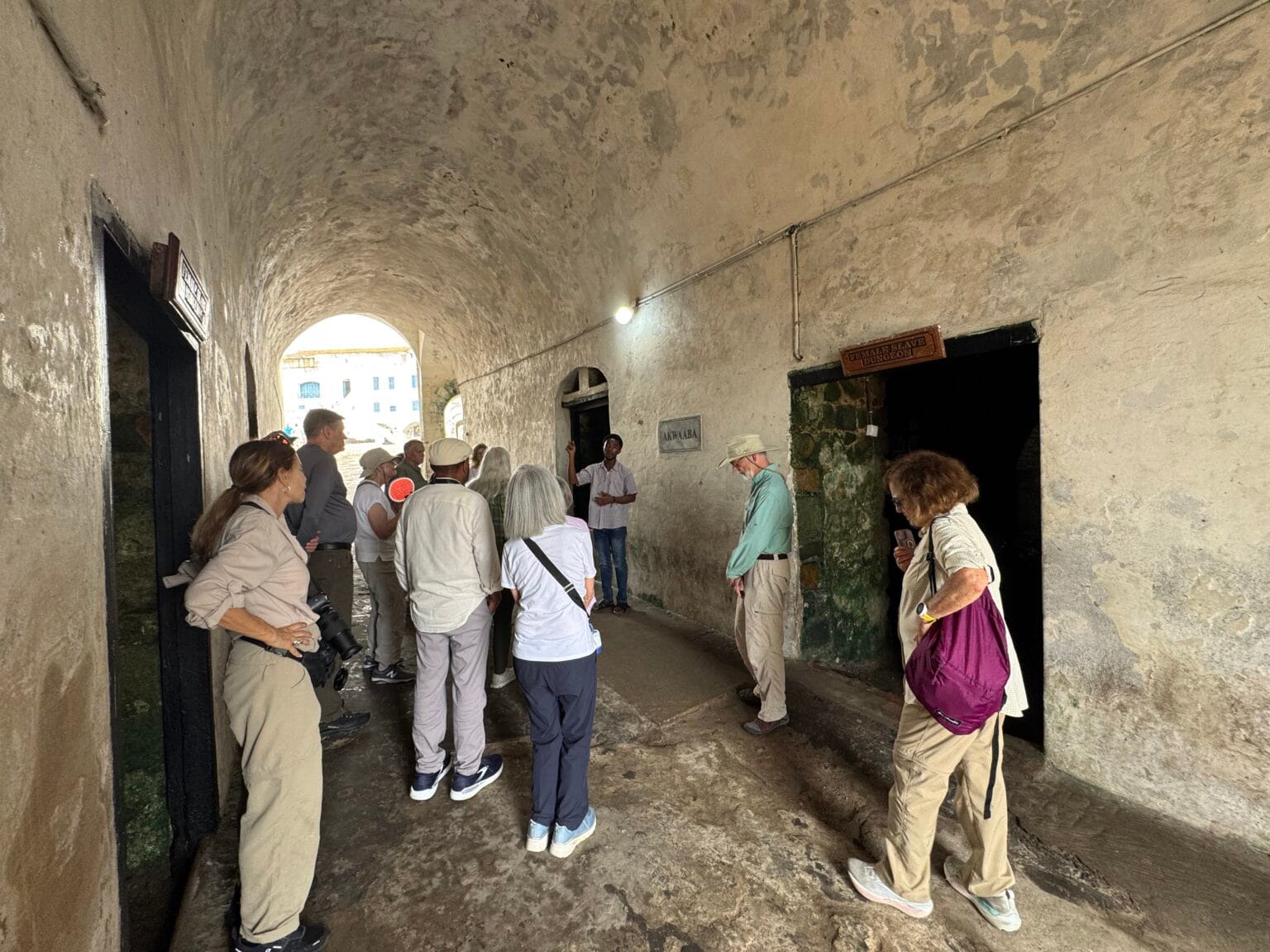
The Fante people of the Gold Coast had, by the end of the nineteenth century, produced one of the most sophisticated indigenous intellectual traditions of the colonial era anywhere on the continent. The Cape Coast lawyers and journalists of the 1880s through the 1920s wrote in English — the colonial language — and used the colonial legal apparatus to do something that the British administrators had not anticipated: they codified Fante customary law as their own constitutional document, on their own terms, and used the codification to limit what the British could do.
If you want to read Fetu Afahye as the Fante themselves read it — as a constitutional event of a polity that survived colonialism with remarkable integrity — you go through three writers. Two are foundational Fante intellectuals. The third is a contemporary American anthropologist who has read them carefully and added a generational layer that the original two could not have foreseen. This is the third piece in our Fetu Afahye Field Notes set; the primer tells you what the festival is, the Operator Notes tell you how to be in it, and this one tells you how to read it.
John Mensah Sarbah, Fanti Customary Laws (1897) and Fanti National Constitution (1906)
John Mensah Sarbah (1864–1910) was born in Cape Coast, educated in Britain (Lincoln's Inn, called to the bar 1887), and returned to practice law in the colony. He was the first Ghanaian to be called to the English bar. He represented Fante clients in the Cape Coast courts, sat in the colonial Legislative Council, and wrote two books that remain the foundational documents of Fante legal and political thought.
Fanti Customary Laws (1897) is a treatise in the form of an English-style legal handbook. Sarbah documented Fante law on inheritance, marriage, property, and chieftaincy in terms that English-trained lawyers could recognize and adjudicate. The implicit political project was significant: Sarbah was arguing, to a colonial administration that wanted to treat “native custom” as primitive and replaceable, that Fante law was a sophisticated system of governance that the British were obliged to respect.
Fanti National Constitution (1906) went further. Sarbah laid out the political architecture of the Fante polities — the Omanhene, the Adikuro, the asafo companies, the relationship between the chiefly office and the deities. He named, for an English-language readership, the political theology that Fetu Afahye performs. If you read no other 19th-century source, read chapters 7 through 9 of Fanti National Constitution.
Joseph Ephraim Casely Hayford, Gold Coast Native Institutions (1903) and Ethiopia Unbound (1911)
Joseph Ephraim Casely Hayford (1866–1930) was Sarbah's contemporary and, in many ways, his political successor. Born in Cape Coast, educated in Britain, returned to practice law in the colony, sat in the Legislative Council, founded newspapers, and ultimately became the leading Gold Coast Pan-Africanist of the early twentieth century. He was a co-founder of the National Congress of British West Africa (1920), one of the foundational political organizations of African anti-colonial thought.
For Fetu Afahye, two of his works are essential. Gold Coast Native Institutions (1903) is the political-philosophical companion to Sarbah's legal treatises — Casely Hayford explains the Fante political imagination, the meaning of the stool, the function of the asafo, the theological framing of the chieftaincy. Ethiopia Unbound (1911), nominally a novel, is in fact a long political-philosophical essay on Pan-African unity, race, and the African modern, with Cape Coast and Oguaa as its imaginative center. The Fetu Afahye, in Casely Hayford's frame, is the annual public reading of a civilization that did not stop existing when the castle was built.
Sarbah and Casely Hayford did, with the colonial apparatus, what the colonial apparatus had not expected: they made the Fante polity legible to British administrators on Fante terms. Fetu Afahye is the festival of that polity. Reading them is how you read the festival.

Cati Coe, The Dilemmas of Culture in African Schools (2005) and after
Cati Coe is an American anthropologist (Rutgers, formerly Bryn Mawr) who has been working in Ghana since the 1990s. Her body of work — particularly The Dilemmas of Culture in African Schools: Youth, Nationalism, and the Transformation of Knowledge (Chicago, 2005) and the subsequent articles on Ghanaian cultural politics — brought the Sarbah/Casely Hayford framework into the contemporary period. Where Sarbah and Casely Hayford were writing inside the late-colonial moment, Coe writes from the post-2000 reconfiguration of Ghanaian cultural politics, with all of the changes that the Year of Return, the diaspora homecoming policy, and the contemporary cultural economy have brought.
Coe's specific value for Fetu Afahye is that she takes the asafo as a continuing political technology, not as a folkloric inheritance. Her field observations in Cape Coast and the surrounding Fante towns show the asafo as actively renegotiating their relationships with the modern Ghanaian state, with the diaspora, with the tourism industry — without losing their internal grammar. If you want to understand what Fetu Afahye is in 2026 (as opposed to what it was in 1906 when Sarbah codified it), Coe is the bridge.
Reading the three together
The reader we hand to our travelers includes excerpts from all three, organized chronologically. Sarbah gives you the constitutional document. Casely Hayford gives you the political philosophy. Coe gives you the contemporary ethnography. Read in sequence, the three deliver a Fetu Afahye that is recognizable to its own makers — not as a colorful Ghanaian regional festival, but as the annual public ritual of a polity that authored itself in print at the end of the nineteenth century and is still authoring itself, in different forms, today.
A note on what you will not find in these three
Sarbah and Casely Hayford were men of their time. They were also, in important ways, men of their class: educated abroad, returning to a colonial legal system, working within frames that the colonial administration would recognize. Their codifications of Fante custom carry their own gendered limitations (women's political agency is undertheorized in both) and their own class limitations (the asafo are written about more from the standpoint of the Adikuro than from the standpoint of the rank-and-file company member). Coe's work goes some distance in correcting both. The Ghanaian feminist scholarship of the past two decades — Akosua Adomako Ampofo, Takyiwaa Manuh — goes further. We include short pieces from both in the reader.
A polity that authors itself in print survives the colonial moment as a thinking community. Fetu Afahye is, every September, the embodied edition of that thinking.
For 2027 booking, contact@heritageandroutes.com. Cornerstone: Fetu Afahye 2027. The festival sits inside our Ghana journeys.